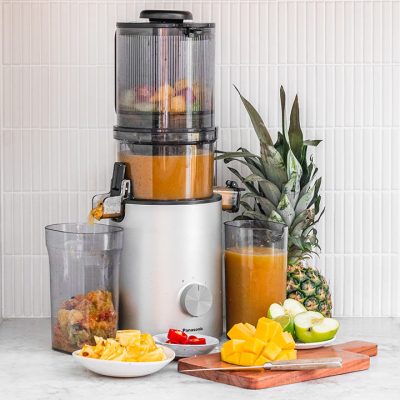
Juicing is trending, but is it really worth investing in a home juicer? While juicing should never replace the importance of consuming whole fruit and vegetables, for juice lovers, it can be a delicious, hydrating way to complement the diet and boost nutrient intake. This is especially true for kids, where eating fresh vegetables can be a daily challenge. However, turning juice-making into a family fun activity can encourage them to enjoy a wider range of fruits and veggies! If you’re starting out on your home juicing journey, you may have come across terms such as ‘slow-juicing’ and ‘centrifugal juicers’ being thrown into the mix, and it can be hard to know which method to pick. But fear not, this article will give you a nutritionist-approved breakdown as to why a ‘slow-juicer’ can make a great addition to your kitchen countertop…
What is slow-juicing and how does it work?
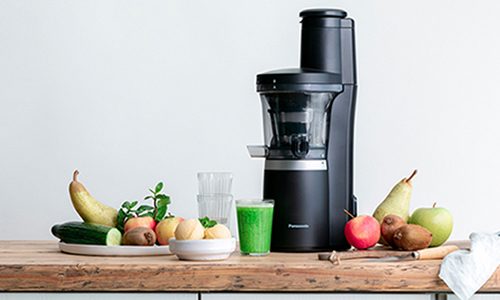
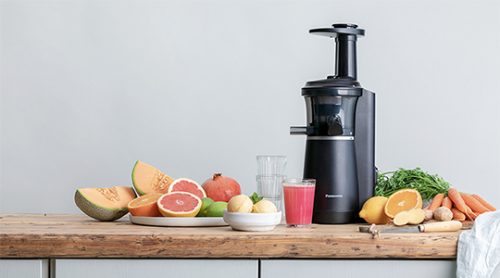
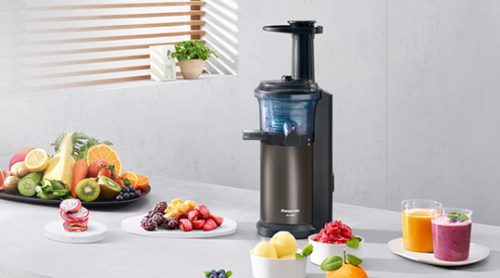
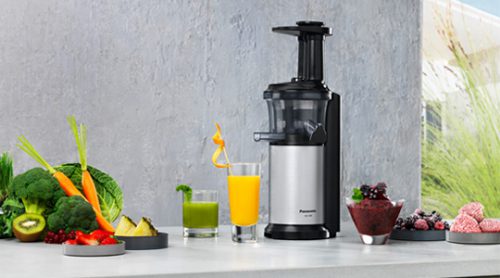
If you’re on the hunt for a juicer, you’re likely to come across a standard centrifugal juicer, which uses high-speed spinning blades to extract juice. On the other hand, slow juicers work by slowly pressing fruit and vegetables to extract juice (a little like squeezing a wet sponge), leaving behind dry pulp.
So what are the nutritional advantages of slow juicers? Here are 5 slow-juicing facts to help you unlock your full juicing potential…
Slow juicing:
1. Could retain more nutrients
In the juicing world, the following hypothesis has been proposed: slow juicing may retain more nutrients because the fast-spinning blades of centrifugal juicers can generate more heat and incorporate more air into the juice, thereby destroying some heat and oxygen-sensitive nutrients, such as vitamin C.
But what does the research say about slow juicers vs centrifugal juicers? Well, differences in their nutritional density depend on which fruits and vegetables are juiced. Slow juicing may maximise health-boosting antioxidants – also known as the “the good stuff”. For example, slow-juiced broccoli (yes, you really can juice raw broccoli) comes with higher levels of polyphenols and flavonoids (1), whilst slow-juicing tomatoes provides more vitamin C and lycopene, a potent antioxidant responsible for tomatoes’ ruby-red colour (2). And let’s not forget that slow-juicing grapes preserves more vitamin C and anthocyanins, which are the antioxidants that give them their beautiful purple hue (3). Now you might be wondering why slow juicing can provide a more nutritious juice. While it’s not yet fully confirmed whether this is due to reduced heat and oxygen exposure, we do know that slow-juicing is highly effective at extracting nutrients from certain parts of fruit and veg, such as grape skins and seeds, where most of the nutrients reside (3). So when comparing slow juicing to shop-bought heat-pasteurised juice, it’s a no-brainer which is the winner. Typical commercially prepared orange juice can lose up to 30% of vitamin C and 40% of its antioxidant capacity during heat processing and storage (5). To put it simply, if your goal is to maximise nutrition, fresh is best!
2. More juice with less waste
With over 58 million tonnes of food wasted annually in the EU (roughly equivalent in weight to 10 million elephants), food waste is a real problem (6)! Opting for an efficient juicing method that minimises food waste is key. Because slow-juicing presses fruit and veg to extract juice, it has been shown to produce higher yields than centrifugal methods, which use fast-spinning blades (7). Making the most of your ingredients with an efficient juicing method means you get more juice, whilst saving money and reducing waste. What’s more, with slow juicing, the leftover pulp is noticeably drier, meaning that really nothing goes to waste, as you can use it to make delicious recipes such as this fibre-rich carrot cake!
3. A fresher and fruitier flavour
Slow juicing may yield a better texture and appearance, as it evenly mixes the juice, whereas centrifugal methods can cause the juice to separate, with foam and bubbles on top (8,9). It’s also been suggested that slow juicers may retain a higher enzyme activity, some of which have the potential to slow the rate of oxidation and spoilage, helping your juice to stay fresher for longer (10).
Plus, when it comes to flavour, sensory panels have stated that fresh pomegranate juice has a ‘more natural fruity aroma’, while fresh orange juice has ‘sweeter natural fruit notes’ compared to their commercially produced counterparts (11,12).
4. Can be lower in sugar (especially when veg-focused)
Juicing at home gives you full control over the quality and nutritional value of your ingredients. It’s easy to prioritise fruit when juicing, but this can quickly increase the sugar content. As current guidance recommends limiting our fruit juice intake to 150 ml per day, adding more vegetables is a simple way to create a more balanced, nutrient-rich juice that provides plenty of vitamins and minerals and keeps sugar content down.
Shop-bought kids’ juices are also often high in sugar, and if getting your kids to eat their veggies is usually a struggle, you can hide things like spinach in homemade apple juice or even carrots in homemade orange juice. Not only does this add a new dimension of nutrients to the juice, but it also helps children to become accustomed to less-sweet, more earthy flavours over time. An easy way to boost nutrition without the fuss!
5. A delicious way to hydrate and nourish the body
Whilst juice should never replace the health benefits of consuming whole fruit, particularly the fibre-rich stuff, it’s interesting to note that there has been exciting research exploring some unique juice benefits. For example, beetroot juice is being studied for potential advantages to exercise endurance, blueberry juice for brain power and tomato juice for heart health (13,14,15). And if you’re looking for that skin glow, juicing could be the way to go. Not only does your skin benefit from its hydrating qualities, but you can also include skin-friendly ingredients, such as beta-carotene-rich carrots, vitamin C-rich kiwi fruit, and antioxidant-packed berries. All the more reason to give these juices a go!

Mandarin, Carrot, Red Pepper and Ginger Immunity Tonic Recipe
A nutritionist’s top tips for juicing at home:
● Be veg-focused – if you struggle to eat enough vegetables, juicing is a delicious way to enjoy their benefits whilst adding goodness to your morning routine. Did you know that broccoli and red bell peppers actually contain more vitamin C per 100g than oranges? They’re a perfect addition to green and orange juices, packing in flavour, nutrients and a vibrant colour. Make the most of the courgette (zucchini) season too as they’re an excellent base for a refreshing green juice. And if you’re looking to try something different, why not add fennel for a liquorice-flavoured twist, or beetroot to really make your purple juice pop!
● Harness the power of lemon – not only for a refreshing flavour, but it also acts as a natural preservative, slowing oxidation. Your juice is likely to stay vibrant and fresher for longer. Juicing a lemon is super easy: simply remove the lemon rind and white pith and add it to your juicer!
● Experiment with juice – why not add beetroot juice to your tortilla wraps and ravioli, or even this eye-catching spelt flour bread to give them a fun red and purple hue!
Final juice thoughts…
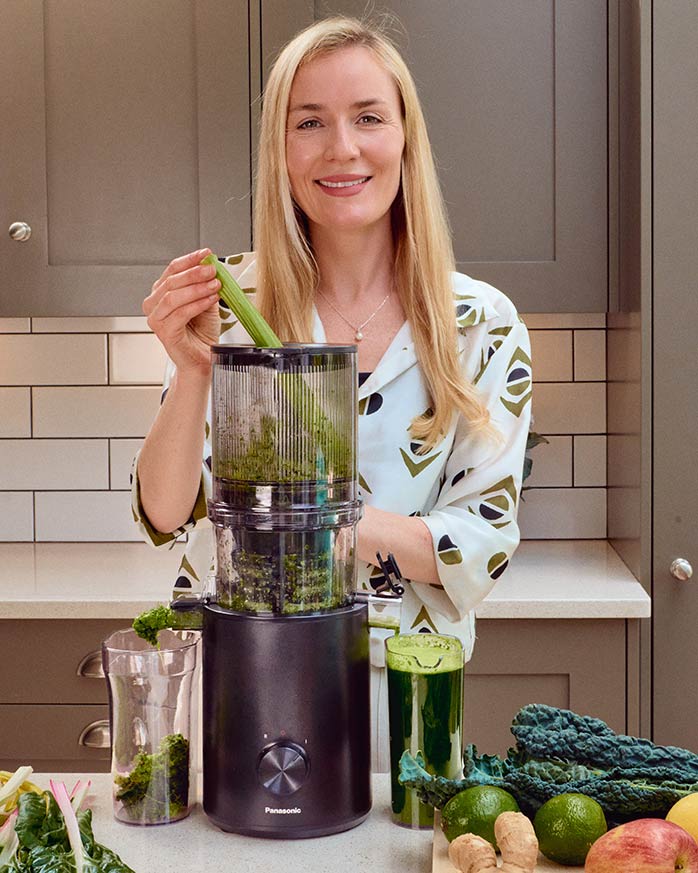
If considering switching to juicing at home, a slow juicer can be a convenient way to maximise nutrition, pack in those veggies, enjoy fresh flavour, and get the most out of your fresh produce!
References:
1.https://pmc.ncbi.nlm.nih.gov/articles/PMC3892506/
2.https://www.researchgate.net/publication/270596389_Quality_evaluation_of_fresh_tomato_juices_prepared_using_high-speed_centrifugal_and_low-speed_masticating_household_juicers
3.https://pmc.ncbi.nlm.nih.gov/articles/PMC6049554/
4.https://www.researchgate.net/publication/11061181_Comparison_of_the_nutrient_content_of_fresh_fruit_juices_vs_commercial_fruit_juices
5.https://academic.oup.com/ijfst/article/46/10/2182/7866735
6.https://ec.europa.eu/eurostat/statistics-explained/index.php?title=Food_waste_and_food_waste_prevention_-_estimates
7.https://ojs.wiserpub.com/index.php/FSE/article/view/3849
8.https://www.researchgate.net/publication/270596389_Quality_evaluation_of_fresh_tomato_juices_prepared_using_high-speed_centrifugal_and_low-speed_masticating_household_juicers
9.https://ojs.wiserpub.com/index.php/FSE/article/view/3849
10.https://www.chrisbeatcancer.com/wp-content/uploads/2011/05/other-juice-extractor-comparison-2007.pdf
11.https://hero.epa.gov/reference/6924605/
12.https://journals.sagepub.com/doi/10.1177/1082013208094723
13.https://pmc.ncbi.nlm.nih.gov/articles/PMC5295087/
14.https://journals.sagepub.com/doi/10.3233/NHA-180056
15.https://pmc.ncbi.nlm.nih.gov/articles/PMC6657743/